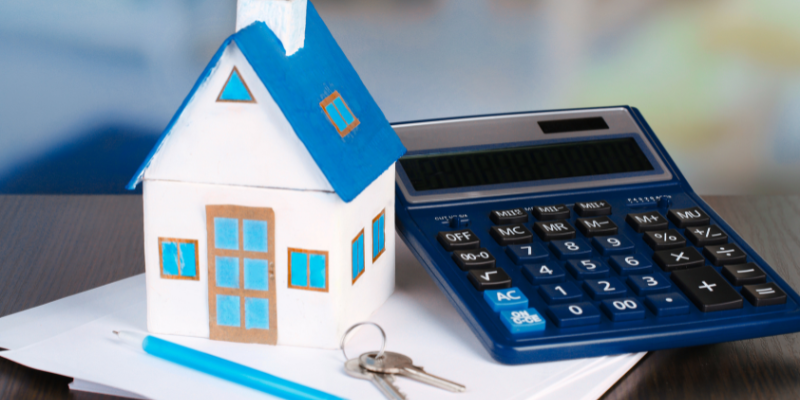
Sell a home here at the statewide median, and you could give back somewhere near $75,000 before the wire hits your account. That isn’t a scare tactic. It’s commissions, escrow charges, title fees, county transfer tax, a repair credit agreed to in the final week, and two mortgage payments you made while the sale crawled toward closing.
I’ve been buying houses in California for years. The gap I see most often isn’t between what a home is worth and what it brings. It’s between the price on the sign and the number at the bottom of the settlement statement, and those two figures can sit miles apart. So let’s walk the full cost to sell a house in California, line by line, with real numbers attached.
The Costs That Show Up Between Listing and Closing
Three siblings in Whittier listed their mother’s house at full retail early last year. Then they spent eleven weeks chasing repair credits after the buyer’s inspection came back ugly. They’d moved her into assisted living that February. Her late husband’s woodworking bench was still bolted to the garage floor when they finally sold as-is and stopped paying to carry the place.
Every owner who lists in California fills six buckets: agent commissions, escrow and title charges, government fees, repairs, carrying costs, and the move. You can argue about five of them. The county transfer tax is plain arithmetic.
Before you list, figure out which buckets deserve your attention. Commissions and repairs hold the real negotiating room. Your timeline decides how big the carrying bucket gets. Escrow, title, and the move land roughly where they land. I’ve watched sellers fight over a few hundred dollars in escrow fees and then shrug at a nine-week listing period. Wrong fight.
C.A.R.’s August 2026 report, released in September 2026, put the statewide median for an existing single-family home at $901,420. That’s barely above the year before, and homes took a median of 28 days to sell. Thirty-year mortgage rates had climbed to 6.95% by mid-September 2026, Freddie Mac’s highest weekly reading since January 2025.
A seller should care about that rate. Expensive money makes buyers picky, and picky buyers ask for credits. A roof that would’ve sailed through in a frenzy turns into a $9,000 line item in a slower market.
If you want to avoid repair negotiations, extended listing periods, and ongoing carrying costs, Romine Group can make a cash offer for your California home as-is, with no obligation to accept.
How Much Does It Cost to Sell a House in California?
“What’s my number going to look like at the end?” I hear that at kitchen tables from Chico to Chula Vista. On a conventional listed sale, plan on giving up roughly 8 to 10 percent of your sale price. Commissions take the biggest share. Escrow, title, transfer tax, disclosures, and recording add a smaller second layer. Repairs and buyer credits come third, and they swing the widest. If you’re trying to sell your house fast in California, understanding these costs upfront can help you compare your options.
A well-kept 2015 Irvine townhome lands near the bottom of that range. A 1948 Oakland bungalow with its original galvanized plumbing can land above the top.
Carrying costs never show up on a closing disclosure, yet they run every day until closing. Your mortgage, property tax, insurance, HOA dues, utilities, and landscaping all keep billing. Two months at a $4,200 monthly housing payment comes to $8,400.
Leave the utilities on. Appraisers and inspectors need to test the water pressure, the outlets, and the furnace. If you’ve already moved out, call your insurance agent before the house goes empty, because most carriers treat a vacant home differently. Then there’s money spent before closing: the painter, the cleaner, the junk hauler, and the stucco patch where the sprinkler hit.
Refinanced recently? Look for a prepayment clause on a second loan or HELOC before you price anything. Your lender’s payoff department can give you the exact figure, with per diem interest through the closing date. Wondering how the payoff fits into the rest of the sale? Here’s how it works when you sell a house with a mortgage in California.
How Much Are Realtor Fees in California?
Commission is the highest single cost to sell a house in California, and it comes out of the full sale price, not your equity. Say you own a $600,000 Sacramento home with $90,000 in equity. You’ll pay commission on all $600,000, and that can eat a quarter of what you expected to walk away with.
California listing agreements commonly run 2 to 3 percent for the listing side. What the buyer’s agent earns is now a separate negotiation written into the contract. Plenty of California buyers still expect you to cover some or all of it.
A discount broker isn’t always cheaper. I’ve watched flat-fee listings sit for 70 days while full-service ones sold in three weeks, and the carrying costs ate the savings twice over. Still, paying full freight for iPhone photos and a four-sentence description is money down a hole. If you’d rather skip the commission conversation entirely, here’s how to sell your house without a realtor in California.
Negotiate. No law or association sets commission rates in California, and good agents will talk about their fee on an easy sale. Ask what the rate buys you, from staging advice to open houses. Find out what changes if they also represent the buyer.
Read the whole listing agreement, not just the rate. Check the term length and the cancellation language. Look hard at the protection period, which pays the broker if you later sell to someone they introduced. Ask whether you can cancel in writing without a fee. And interview three agents, since the gap between a great one and an average one shows up in your net proceeds.
California Seller Closing Costs, Property Taxes, and Attorney Fees
This is the part of the settlement statement where twelve small numbers add up to one big one.
California sales close through escrow and title companies, not attorneys. No state law forces you to hire a lawyer for an ordinary residential transaction. Bring one in anyway if your situation has teeth, like a contested probate, a partition fight between siblings, a boundary problem with a neighbor, or a trust with fuzzy language. On a clean sale, your escrow officer’s got the mechanics covered.
County documentary transfer tax runs $0.55 for every $500 of value, or fraction of $500, under Revenue and Taxation Code section 11911. San Joaquin County’s recorder walks through the math and the exemption affidavit clearly. Some cities stack their own tax on top, and a few of them bite hard. Culver City, Los Angeles, Oakland, San Francisco, and Berkeley all charge local rates above the county baseline, with higher tiers as the price climbs. Ask your city finance office or county recorder for the current figure on your address.
Regional custom, not statute, decides who pays what in escrow. In Southern California, sellers usually cover the owner’s title insurance policy and often split escrow fees. Many Northern California counties put escrow and the title policy on the buyer instead. Everything is negotiable in the contract.
Property taxes get prorated to the day of closing. Say you’ve paid an installment that covers time past your closing date. You get credited back. If you haven’t paid it yet, the buyer gets the credit. Your county tax collector can confirm which installments have posted on your parcel.
Budget for the smaller costs too: recording fees, notary charges, HOA document prep, and a home warranty if you offer one.
What Do Home Repairs, Staging, and Prep Cost Before You List?
“I’m not dumping twenty grand into a house I’m leaving.” Fair, and often right. Full kitchen remodels rarely pay back in California, since buyers plan their own renovations anyway. Small fixes work differently. Exterior paint, a deep clean, fresh mulch, working light fixtures, and patched dry rot on the window trim help showings turn into offers. Buyers photograph deferred maintenance and send it to their agent with a demand attached.
A pre-listing inspection runs about $400 to $700, and I can’t think of a better use of that money. You see what the buyer’s inspector will find. Then you price each problem yourself instead of letting a nervous buyer do it under contract.
Check permits early, too. An unpermitted patio enclosure or garage conversion turns into a disclosure item and can muddy the appraisal. Pull the permit history at your city’s building department, or have your agent do it.
Stage a vacant house. If you’re still living there, decluttering and pulling out half the furniture usually does the job. Empty rooms photograph small and cold, and buyers shop on their phones first. Rented staging furniture bills monthly, often with a multi-month minimum.
That math falls apart on houses with real problems. Picture foundation movement in Central Valley clay, galvanized supply lines, knob-and-tube wiring in an older Pasadena or Alameda home, or a worn-out roof. Repairs like those can cost five figures, and lenders may not fund until they’re finished. So you’ve got a choice. Fix it and list it, or sell as-is and price for it. Your cash on hand and your timeline will tell you which one fits. If that house sits in Clovis, you can sell your house fast in Clovis, CA as-is and skip the repair bill.
If you’d rather sell as-is than spend thousands on repairs, you can get a cash offer based on your home’s condition. Contact us to see what a direct sale could look like, with no obligation.
Will You Owe Capital Gains Taxes on Your California Home Sale?
Most people selling a primary residence in California never write a federal capital gains check.
Federal law lets a single filer exclude up to $250,000 of gain, or $500,000 for a married couple filing jointly. You need to have owned and lived in the home for at least two of the five years before the sale. IRS Publication 523 has the details. Your gain is the sale price minus what you paid, your capital improvements, and your selling costs.
Receipts matter for that reason. Hang on to contractor invoices, permits, your original settlement statement, and the paperwork from big jobs like a new roof. Improvements add to your basis, while routine repairs usually don’t. Near the exclusion limit, that difference is real money.
Long-time owners in coastal California are the big exception. A couple who bought in Santa Monica or Palo Alto decades ago can blow past the exclusion without ever feeling rich. Gain over the limit gets taxed by the IRS and by California.
Watch for state withholding at closing as well. Escrow generally holds back 3 1/3 percent of the gross sales price on real property sales. You can claim an exemption on Form 593 if the home was your principal residence or the sale produces no gain. The Franchise Tax Board’s instructions lay out your options, including a calculation based on your actual gain.
Inherited property plays by different rules, because the basis usually resets to the value at the date of death. Selling an estate property, or a former rental that claimed depreciation? Pay a tax professional.
How Much Will You Make Selling Your California House?
Misjudge your net by $30,000, and you may not be able to close on your next house. I’ve seen sellers lose the next place they’d agreed to buy because they planned around the sale price instead of the proceeds.
Start with your contract price. Subtract the mortgage payoff with per diem interest, then commissions, escrow and title charges, and transfer taxes. Take out credits and repairs, carrying costs through closing, and the move. Whatever’s left is yours.
Now hold that number up against a cash offer. A direct sale usually comes in under retail. It also removes commission, repairs, staging, months of carrying costs, and the risk of a financed buyer walking at day 25. Compare net to net and date to date. An offer that looks higher but closes two months later may not be higher once you add the payments and the chance it falls apart. If you’re considering a cash-for-houses company in Bakersfield and the surrounding California cities, compare the actual net proceeds and closing timeline before deciding.
A woman in Modesto called me about her father’s house. It was packed with three decades of belongings, and the Buick in the garage hadn’t started since the Clinton administration. Her brothers lived out of state and wanted a clean exit. We bought it with everything inside. She kept his photos and tools, and the siblings split the proceeds before the holidays.
If the place is clean and updated and you’ve got time to wait, the open market will generally net you more. With repairs, tenants, probate, or a deadline, going direct often comes out ahead after costs.
Frequently Asked Questions
What Will It Cost Me to Sell a $400,000 House?
Using that 8 to 10 percent range, expect roughly $32,000 to $40,000 on a conventional listed sale. Commissions take the biggest bite, with escrow, title, and county transfer tax adding a smaller share. Repairs and buyer credits move the total more than anything else. Homes at this price in California often sit in inland markets, where FHA and VA buyers make the appraisal matter more.
How Much Tax Will I Owe When I Sell My California House?
If it was your primary home and you pass the two-year ownership and residence tests, the federal exclusion likely covers your whole federal capital gains bill. California still has escrow withhold a flat share of your gross sale price unless you certify an exemption before closing. Anything withheld beyond what you owe comes back when you file your state return. Rentals, inherited property, and second homes follow other rules, so talk to a CPA before you sign.
What Should I Budget for Closing Costs on a Sale Between $300,000 and $500,000?
Leave commission aside, and closing costs usually land in the low single digits as a percentage of price. One 2026 industry survey put the California average near 2.7 percent, which is roughly $8,000 at $300,000 and about $13,500 at $500,000. Most of it goes to escrow, the owner’s title policy, transfer tax, recording, HOA documents, and any home warranty. Ask your escrow officer for a written estimate, since city and county transfer tax rates change the total.
If you’re weighing a listing against a direct sale and just want someone to run honest numbers with you, Romine Group is happy to do that. Call us at (559) 254-8223. No pressure, no obligation, and no hard feelings if you decide the open market is the better fit for your house.